
Goldfinch Small Birds, Big Payoff 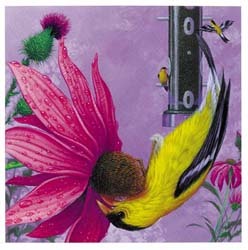
Performing a variety of aerial acrobatics, goldfinches transform an ordinary backyard into a stage for their graceful displays.
As they swoop from one invisible peak to another, goldfinches showcase their remarkable agility and energy. But as impressive as their flights are, they’re only one part of what makes these birds a joy to observe. In fact, goldfinch are little daredevils when they are effortlessly pulling seeds from the downward facing coneflower & sunflower heads.
American Goldfinches do not nest until mid- to late-summer, long after most birds have started their families.
- In July and August, after the male has serenaded the female with canary-like songs, goldfinches begin to nest for the first and only time of the year.
- The location of the nest is usually 5 to 10 feet high in trees or shrubs and often near a water source.
- The delay in nesting affords bird enthusiasts the opportunity to focus their attention on goldfinches during this exciting time of song and activity, especially since other birds are less active because of their new family lives.
Goldfinches live throughout the United States and southern Canada, a fact that makes attracting them to your backyard a bit easier. Though goldfinches carry the reputation of being finicky eaters, you’ll have no problem finding a suitable offering that will please their palate.
- Keep their food fresh and carry only small amounts that they will eat through in a 4 week time period.
- Keep their feeders clean and dry; never pour new seed on top of old seed in the feeder or storage container.
- Finch food can be stored in the freezer for freshness and longer storage.
- Goldfinches love to eat fresh, dry Nyjer® (thistle) and sunflower chips.
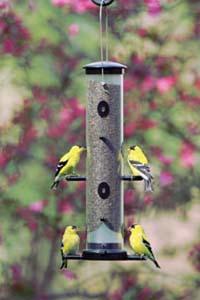
Occasionally, larger birds can intimidate goldfinches and discourage them from visiting your feeders. If other small birds are taking over the space, consider using feeders designed specifically for agile goldfinches.
- Some feeders can be turned upside down to take advantage of their unique ability to feed while hanging upside down.
- You can also offer a caged finch feeder that helps keep larger birds at bay while allowing goldfinches easy access to food.
- Another option is a mesh finch feeder without perches, which makes it more difficult for larger birds to cling and feed.
In early fall, the male goldfinches molt into duller winter colors that resemble the female's soft olive green and subdued yellow tones. And just when it seems as though winter will last forever, the male goldfinch forecasts spring’s arrival with the reappearance of its glamorous buttery yellow.
Male or female, the goldfinch’s striking features are always pleasing to the eye and make any backyard distinctly more colorful.